
Protecting rumen health this winter
Published: 15 September 2026
Managing forage challenges and supporting rumen function
2026 will undoubtedly be a year that goes down in history in the farming community, from unrelenting rain to extreme drought. Whilst the degree to which farms are affected depends a lot on location, it is fair to say everyone has been impacted to some degree.
With a large proportion of farms having lower forage stocks on hand both now and heading into the winter in many cases, diets must be carefully to support rumen function and balance nutrients in order to maintain performance.
General diet considerations
Cattle are ruminants and require biological minimum levels of fibre in the diet to protect rumen function and maintain performance, which is particularly important when we are trying to stretch forage supplies.
Running with minimum forage in diets carries substantial risk but with many farmers left with no alternative option for the months ahead it is the tight rope they will have to walk. Careful reformulation with a focus on rumen stability, cow health and performance, and planning for the herd's dietary requirements months down the line will help famers to navigate the challenge.
A forage to concentrate ratio in diets of 60:40 are typical and can support high levels of performance where good quality forage is provided with properly balanced concentrates. This ratio can be brought lower, depending on ingredients. Not all “concentrates” are equal or comparable in their composition of raw materials -- for example, wheat versus sugar beet pulp.
Farmers should work with their nutritionist or feed adviser to determine the right balance for their herd. Whilst level of production, etc. dictates exact targets, a rough rule of thumb in the overall diet are outlined below.
Lactating cows
- Maximum Starch: 24% of diet DM
- Minimum NDF: 32% of diet DM
- Forage NDF: minimum of 24% (19% is possible with careful formulation)
- Crude Protein: 16-17% of diet DM (amino acid balance and metabolizable protein supply are crucial)
Dry cows
- Maximum Starch: 13% of diet DM (18% if close-up)
- NDF Range: 44–54% of diet DM
- Crude Protein: 13–15% of diet DM (15–16% if close-up)
So, for farms that are facing a severe forage shortage this winter what are the minimum levels of forage we can drop to whilst still maintaining adequate rumen function to support health, production and fertility?
As an illustration, the table below shows the approximate minimum requirement for a 680kg cow when feeding grass silage at 30% DM and 47% NDF. (Indicative figures only. Actual requirements will vary according to stage of lactation, dry matter intake, forage quality and the rest of the ration.)
|
Milk yield |
Indicative minimum fresh silage/cow/day |
|
40 litres |
35kg |
|
35 litres |
32kg |
|
30 litres |
28kg |
|
25 litres |
26kg |
|
20 litres |
24kg |
Why rumen health matters
The rumen microbiome is highly adaptable – but it needs time and consistency to adjust to dietary change. As cows move indoors and cereal inclusion rises, microbial populations are disrupted. Cereals ferment quickly, producing volatile fatty acids (VFAs) and lactic acid. If fermentation outpaces the rumen’s natural buffering capacity, pH begins to fall, fibre-digesting microbes die off, and the rumen becomes increasingly acidic.
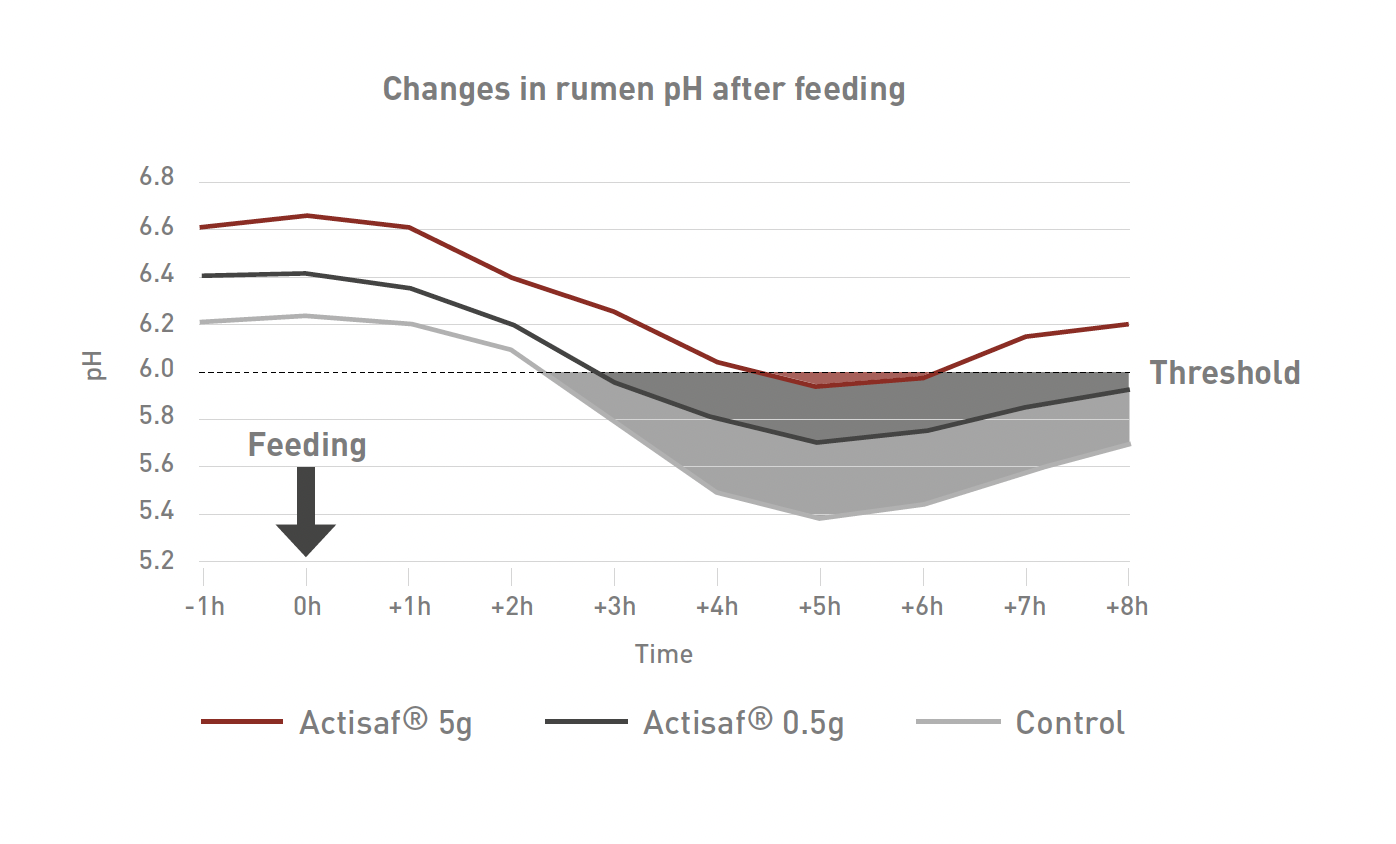
With less fibre in the diet, saliva production also declines, further weakening the cow’s natural acid-buffering system. Once pH dips below 6.0, fibre digestibility drops sharply, energy supply falls, and the cycle can escalate into sub-acute rumen acidosis (SARA).
5 steps for when forage is tight
- Know what forage the farm has. Measure clamps, count and weigh bales and, importantly, get all forages analysed. (Download our check sheet here)
- Work out the deficit now and keep reviewing it. Calculate how much forage a farm need for the months ahead and compare this with the stocks currently available. There may still be opportunities to conserve more grass silage over the next couple of months, but this will depend on weather and grass growth, so shouldn't be relied upon. Help farms plan based on what you know they have now, then review and adapt the plan as the season progresses and you have a clearer picture of additional forage stocks.
- Prioritise the cows that need it. Fresh and higher-yielding cows are particularly vulnerable when intakes are under pressure, so prioritise the best-quality forage for these animals where possible.
- Look at all the options. Could additional grass, maize or wholecrop silage be purchased? Is there scope to use more straw within a correctly formulated ration? Could herd numbers be reviewed? Is every cow covering her cost in milk production? As a useful illustration, removing five unproductive cows from the herd could save around 1.3 tonnes of silage each week, or more than five tonnes a month.
- Reformulate – don't simply replace forage with cereal. Lower-forage diets will require changes to the type of concentrate being fed, including greater use of digestible fibre and additional protein, alongside appropriate mineral and vitamin supplementation. The cheapest feed per tonne isn't necessarily the lowest-cost ration if it compromises intakes, rumen function, milk production or fertility.
Is straw available?
Straw can help stretch silage stocks, with inclusion of up to around 2kg/cow/day possible in an appropriately formulated ration. It needs to be chopped to approximately 2–3cm and thoroughly mixed into the PMR/TMR to reduce sorting. The rest of the ration will also need to compensate for its lower energy and protein content.
Watch out for lush autumn grass
Recent rains should support badly needed grass growth. While very welcome for grazing herds, care needs to be exercised as this lush and leafy grass will undoubtedly challenge rumen function and increase the risk of SARA / acidosis and rumen upsets potentially reducing milk solids yield. Luxury uptake of nitrogen from soils with growth taking off after recent rains heightens the risk of excessively high protein levels in grass which can lead to high rumen ammonia levels and subsequently high milk urea levels.
Protect rumen stability
When forage levels are already tight, avoiding unnecessary disruption to the rumen becomes even more important.
- Minimise unnecessary ration changes.
- Make significant changes gradually.
- Where possible, use several forage sources at lower inclusion rates rather than repeatedly running out of one forage and changing the ration.
- Ensure feeds are well mixed to minimise sorting.
- Closely monitor intakes, dung consistency, cudding, milk yield and milk constituents.
Monitor fibre digestion with Digescan™
Recording and measuring the rate at which fibre is digested can traditionally be difficult and expensive to do at farm level. To help farmers do this more efficiently, Phileo by Lesaffre created Digescan™:
- The Physical Faecal Sieve: An on-farm kit used to quickly separate and wash manure, exposing exactly how much undigested fibre is passing through the herd.
- The Digescan Mobile App: A digital logging tool where you weigh and record particle traits, letting you visually demonstrate digestion trends and feed efficiency directly to the farmer.
The cost of SARA
Even small drops in rumen pH have big consequences:
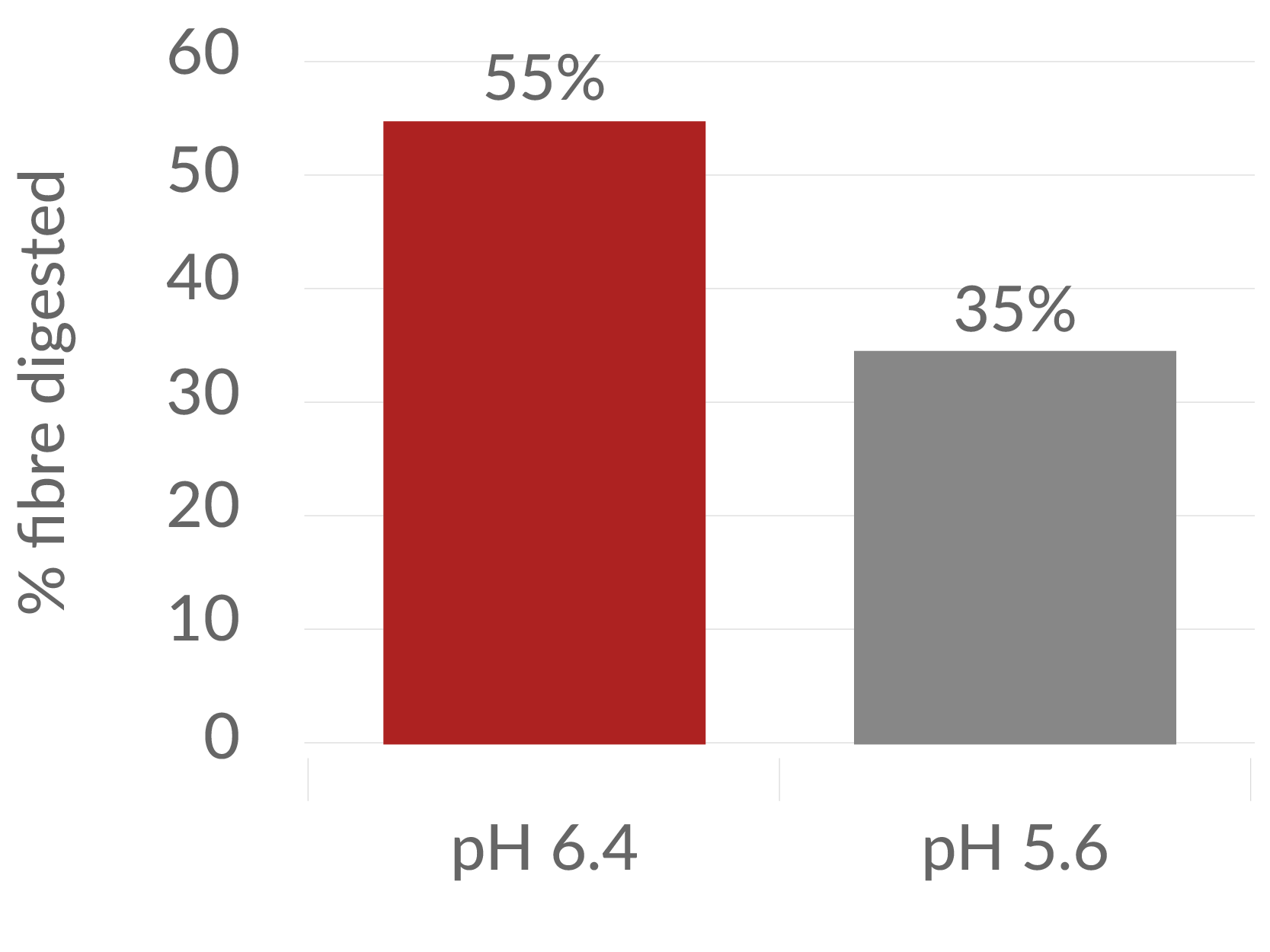
- At pH 6.4, cows digest only around 55% of fibre
- At pH 5.6, fibre digestibility falls to 35%
This loss of energy and nutrients leads to negative energy balance, reduced intakes and excessive weight loss. Knock-on effects include:
- Higher risk of displaced abomasum and ketosis
- Fertility challenges in early lactation
- Laminitis, elevated somatic cell counts, and poorer udder health
- Lower milk butterfats from reduced short-chain fatty acid production
Spotting the early signs
Kevin Doyle, Phileo’s technical manager, advises farmers to watch for “cow signals” of poor rumen performance:
- Sudden butterfat drop of 0.3% in two to three days
- Loose, bubbly dung with undigested fibre
- Low cudding rates (fewer than 60–65% of cows lying and chewing the cud by midday)
- Poor rumen fill scores or reduced dry matter intakes
Catching these signs early allows for proactive intervention before SARA compromises performance and health.
Actisaf® Sc 47: Supporting a stable rumen
High cereal, low forage rations may be unavoidable this year – but Actisaf® Sc 47 live yeast can help mitigate the risks. By stimulating fibre-digesting microbes and lactate-utilising bacteria, Actisaf® supports:
- Improved fibre digestion
- Stabilised rumen pH through biological buffering – Just 5g of Actisaf® has a superior buffering effect compared to 150g of sodium bicarb
- Smoother adaptation to dietary changes
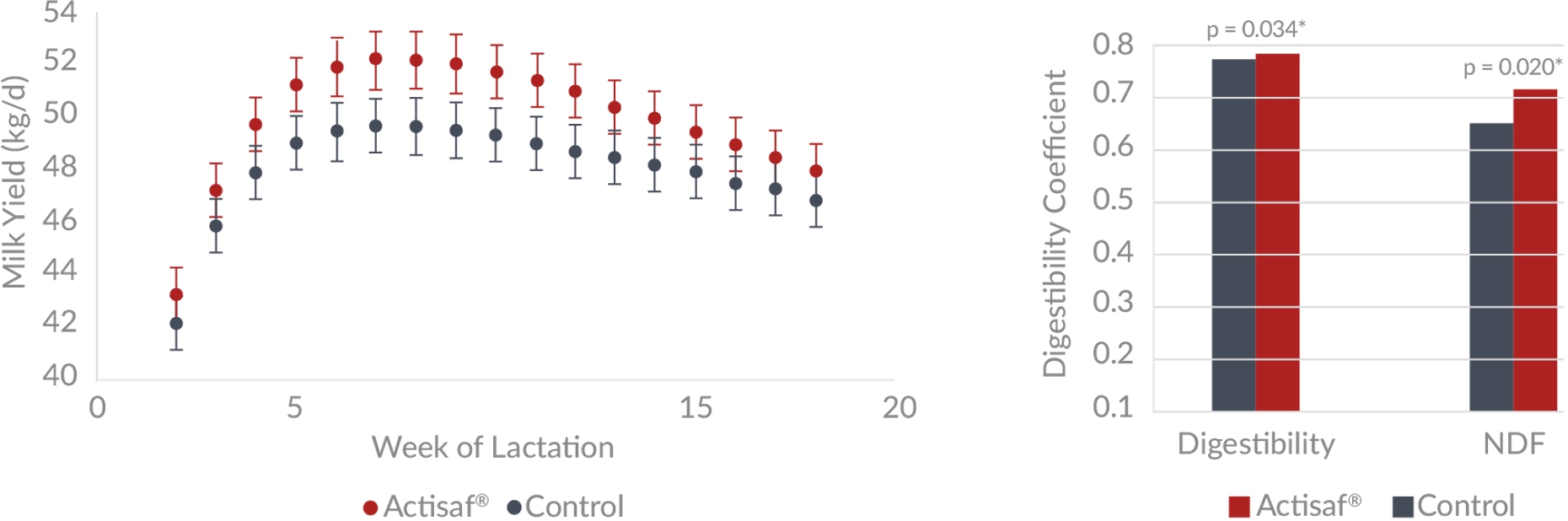
University of Nottingham trials show that feeding 10g/day of Actisaf® improved NDF digestibility by over 6% and boosted feed efficiency by 5% – without compromising body condition, fertility or health.
Turning challenge into opportunity
With reducing milk prices, we must carefully consider all costs in the diet and ensure they are providing a clear ROI. This includes maintaining rumen function to prevent SARA and ensure that every kilo of forage and cereal is converted as efficiently as possible.
Effective rumen management, supported by Actisaf®, will protect cow health, sustain performance, support milk solids and milk yield and help farmers make the most of challenging diets this winter.
Don't just take our word for it...

When silage quality dipped, Staffordshire dairy farmer James Turnock faced challenges with cow performance and rumen stability. By introducing Actisaf® into his herd’s diet, he was able to improve fibre digestion, maintain milk output and keep cows in good condition — even in a tough forage year.
“Since adding Actisaf® into the diet there has been a big improvement.... Actisaf® has solved the acidosis problem completely. Whilst it took a few weeks to take effect, dung consistency improved and cud balling has been eliminated. What’s very noticeable is the lack of dietary upsets - that has been the most visible benefit.”

After battling recurring acidosis in his herd, cheesemaker Malcolm Errington needed a reliable solution to stabilise rumen health. Adding Actisaf® to the ration resolved the problem, supporting digestion, cow performance and ultimately, milk quality for his artisan cheese business
“The minute we put the Actisaf® in we saw a benefit. It is hard to quantify but cows definitely seemed happier and more content, and cudding rates increased to more than 60% cudding 2 hours after feeding. Muck was more consistent and cows seemed to be lying down more."
Related Tech Info
Heat stress is not only a challenge faced by milk producers in warmer climates - cows are also susceptible to it here in the ...
Falling milk prices and limited forage in some areas are increasing pressure on winter rations and forcing difficult decision...

Milk prices are under pressure, so farms across the country are focusing on cost control. Feed typically accounts for around ...