
Feeding ewes for a smoother lambing season
As lambing season approaches, nutrition becomes one of the biggest influences on flock performance.
Late pregnancy is a delicate balancing act. Underfeeding increases the risk of twin lamb disease, weak lambs, mismothering and low milk yields. Overfeeding can be just as problematic, raising the odds of prolapse, lambing difficulties and immune suppression, as well as twin lamb disease and reduced milk yield. Achieving optimum nutrition lies in understanding what the ewe needs and supporting her rumen so she can use every mouthful efficiently.
Below are the core principles that underpin good pre-lambing nutrition and help set both ewes and lambs up for success.
Why the pre-lambing period matters
In the final six weeks before lambing, foetal growth accelerates dramatically, with weight increasing by 70%, 50% and 20% in the last six, four, and two weeks before lambing, respectively. As lambs grow the ewe’s rumen capacity is naturally reduced and daily intakes often fall, just as energy and protein requirements are rising sharply.
A range of issues can occur if this gap is not addressed, including:
- Pregnancy toxaemia/twin lamb disease
- Poor maternal behaviour
- Weak lambs with reduced vigour
- Lower colostrum quality and milk supply
Farmers can get ahead of these risks and ensure ewes are in adequate condition by implementing targeted feeding and management principles…
Group ewes based on nutritional need
Scan ewes and divide them into groups based on the number of lambs they are carrying. Ewes carrying singles, twins and triplets have markedly different energy and protein demands (see figure 1), so feeding by lambs carried is critical.

Body condition scoring will help fine-tune the approach, ensuring thinner ewes get the support they need without overfeeding those already in good condition.
Build the diet around forage, then supplement the gaps
Forage should be the backbone of the ration, so a quick analysis is invaluable for understanding its nutrient content. Once the fibre, energy and protein levels in forage are known, any gaps can be identified and supplemented using concentrates.
Provide a mix of energy and protein sources to support the rumen and meet ewes’ metabolic needs, including:
- Structural fibre (e.g. hay, silage) to maintain rumen structure
- Digestible fibre (e.g. beet pulp, soya hulls) for slow-release energy
- Starch and sugars (e.g. cereals & high quality forage) support colostrum production and provide faster degrading forms of energy.
- High quality protein (e.g. rapeseed meal, gluten, soya bean meal) for colostrum production, milk yield and ewe metabolic function.
Adequate trough space is also critical. Aim for 15cm per ewe for ad lib forage and 45cm per ewe when feeding concentrates. This equates to 30 ewes per bay for ad lib forage or 11 ewes per bay for concentrates using a standard 15.5-foot bay.
As pregnancy advances, ewes also need more bypass protein for lamb growth and colostrum.
DID YOU KNOW: A twin-bearing 70kg ewe needs around 60% more metabolisable protein in the final seven weeks of pregnancy.
Choose the right concentrates
High-quality concentrates, combined with good quality forage, reduces the total feed volume needed to support ewe health and lamb vitality. Look for:
- High cereal content to supply reliable energy for the rumen microbes.
- High concentration of bypass protein sources, like soya
- Fortification with vitamins and trace elements, particularly Vitamin E (150 mg/kg) and selenium (0.5 mg/kg) to support ewe and lamb immunity
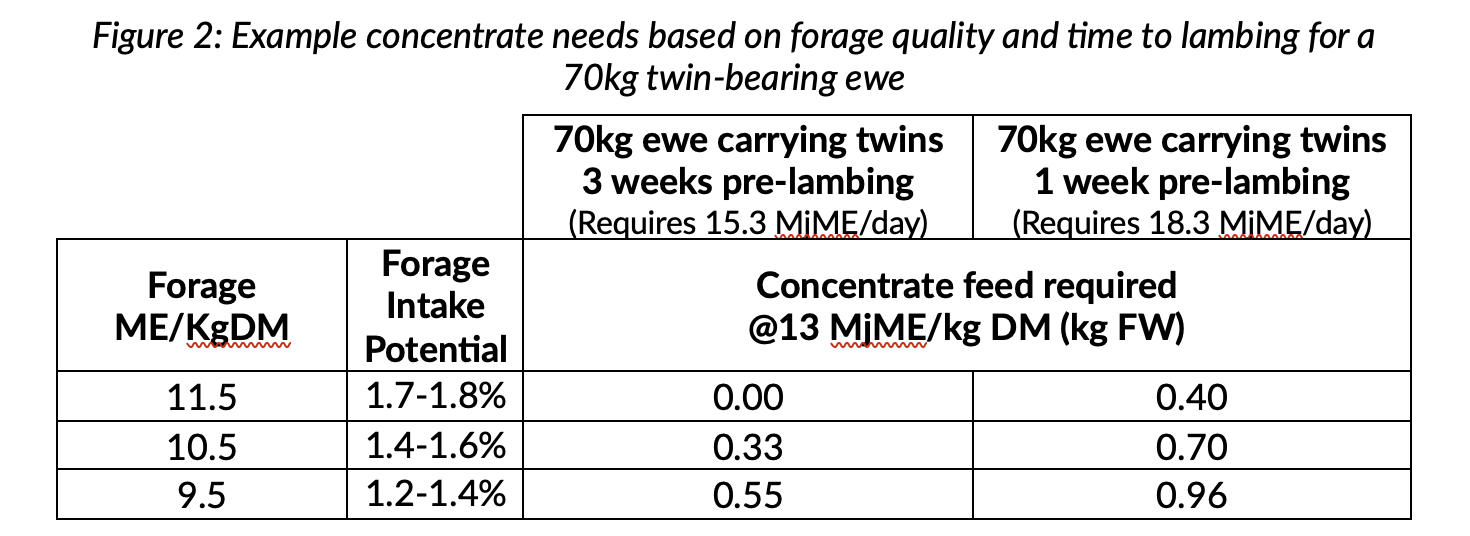
Concentrate requirements vary with forage energy and stage of pregnancy. Figure 2 demonstrates how forage quality and pregnancy stage affects concentrate requirements, using a 70kg ewe carrying twins as an example.
Triplet-bearing ewes will have even lower intake capacity plus higher nutrient requirements and should therefore be treated as a separate group. Similarly, underweight twin-bearing ewes should be treated the same as triplet-bearing ewes.
It is always best to consult directly with your feed adviser when developing a feeding plan for your flock, as small changes in forage quality can quickly mean that theoretical feeding levels fall short.
Optimising the rumen and supporting immunity
A pre-lambing ration is only as effective as the microbes digesting it. Sudden diet changes, meal feeding and higher starch levels all place pressure on rumen microbes and reduce their efficiency, especially those responsible for fibre digestion which are sensitive to rumen pH levels.
Poor rumen function, particularly if sub-acute rumen acidosis (SARA) occurs, damages the rumen and gut lining and increases intestinal permeability. This allows microbes and toxins to pass into the bloodstream, triggering systemic inflammation that diverts energy and nutrients away from other systems like milk production and recovery. In freshly lambed ewes, this inflammatory response further suppresses feed intake and deepens negative energy balance, further increasing the risk of metabolic disorders such as twin lamb disease.
Allowing to 7-10 days for the transition onto late-pregnancy diets helps stabilise the rumen by allowing the microbes within it time to adjust. Adding Actisaf® Sc 47 live yeast stabilises rumen pH while supporting the growth of microbes that digest fibre and convert lactic acid to propionate.
Other benefits include:
- Increased feed intakes
- Improved fibre digestion and propionate production to supply glucose (helping to lower the risk of twin lamb disease)
- Reduced fat mobilisation in ewes and increased weight recovery post lambing
- Up to 20% more milk for lambs, with higher fat and protein content
- Smooth dietary transitions
- Reduced risk of acidosis
As lambing draws near, the ewe diverts nutrients to her lambs, leaving her own immune system under strain. This can result in higher worm burdens and increased susceptibility to disease, particularly in ewes that are under-conditioned.
Safmannan® premium yeast fraction supports immune function and improves colostrum quality, helping ensure lambs receive the antibodies they need in the first vital hours of life and improving their lifetime performance.
Getting pre-lambing nutrition right pays back dividends for farms through fewer lambing complications, thriving lambs and healthier ewes. Focus on forage quality, targeted feeding and support the for increased productivity and profitability.
Related Tech Info
As we head towards the lambing season it is important to focus on ewe nutrition to ensure optimum flock performance. The ewe’...
With feed and forage representing 70% of the variable costs of finishing beef and lambs, improving its utilisation can have a...
Assuming farmers have assessed resources, prepared a budget and are going to finish home grown or bought-in lambs, there are ...